


A weary traveler once traded a missed train ticket for an impromptu motorbike ride through Hanoi's Old Quarter — and discovered that the best travel moments are unexpected. This short guide channels that spirit: a lively, slightly imperfect tour of Vietnam Travel 2026, pointing readers to ten standout destinations, practical must-dos, and a couple of detours worth the wobble. Test 2.
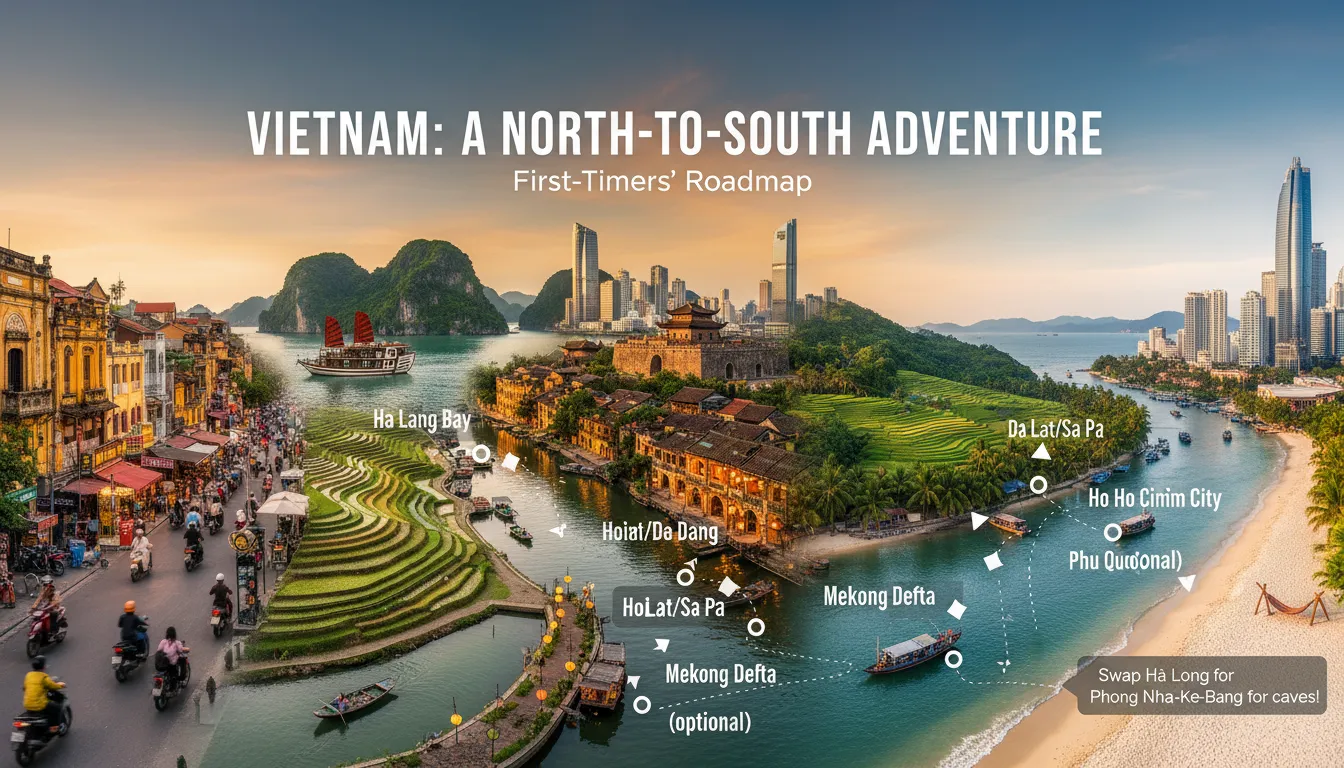
1) A Quick North-to-South Route (First-Timers' Roadmap)
For first-time visitors, a simple north-to-south plan helps Vietnam feel easy, not rushed. It starts in Hanoi for street food and old streets, then moves to a Ha Long Bay cruise for limestone islands and calm water. A Ninh Binh day trip adds river caves and rice fields without changing hotels.
Next, the route heads to the central coast: Hoi An (lantern nights) and Da Nang (beaches and quick flights). Hue follows for royal history and quiet riverside views. For cooler air, travelers can choose Da Lat for pine hills and cafés, or Sa Pa for mountain walks and terraces.
Hanoi → Ha Long Bay → Ninh Binh
Hoi An/Da Nang → Hue
Da Lat/Sa Pa → Nha Trang
Ho Chi Minh City → Mekong Delta → Phu Quoc (optional)
Why it works: the climate shifts slowly, culture changes step by step, and domestic flights connect major hubs like Da Nang and Ho Chi Minh City. It also layers history, coast, and mountains in a logical order.
If caves matter more than karsts, swap Ha Long Bay for a longer Phong Nha-Ke Bang adventure.
2) City Pulse: Hanoi Capital & Ho Chi Minh City Hustle
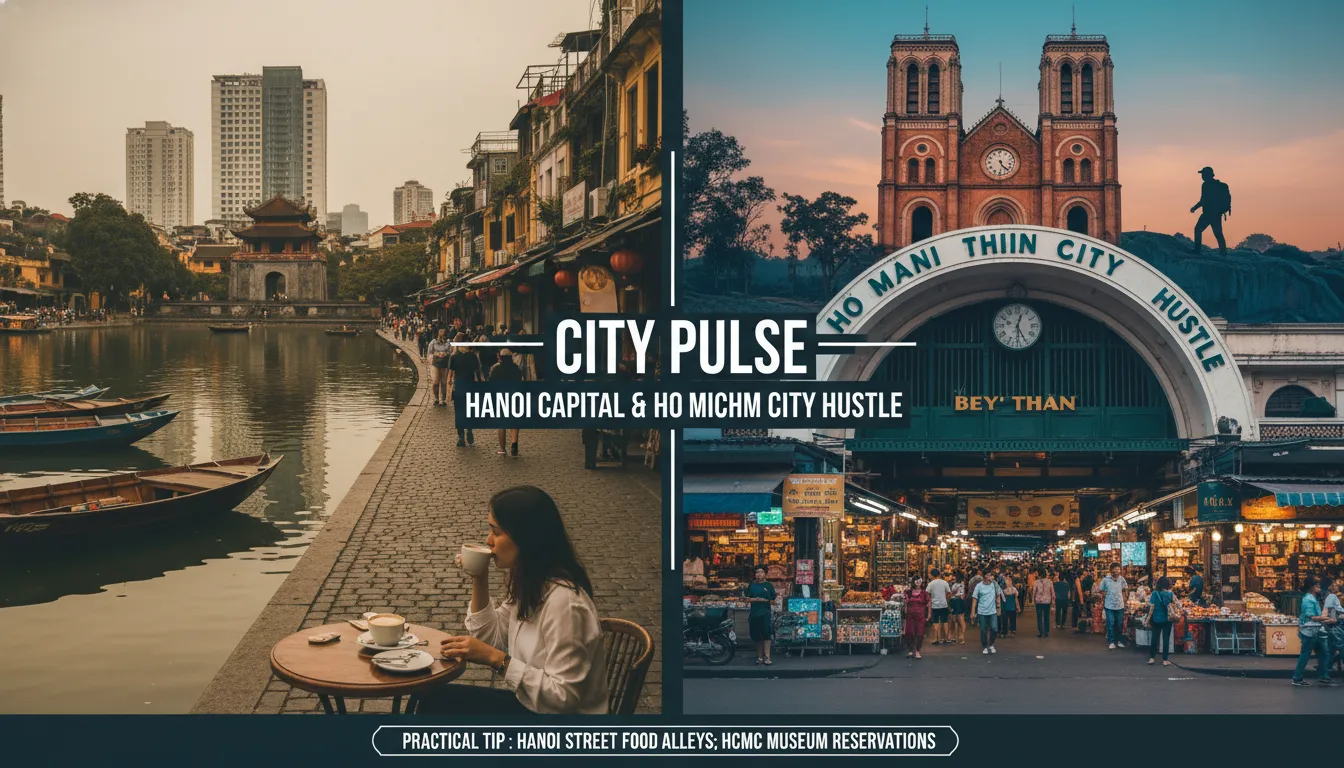
Vietnam’s two biggest cities show two different rhythms. Hanoi, the capital, feels layered and calm at times, then bursts with life in seconds. In the Old Quarter, travelers can wander past charming shopfronts, buzzing scooters, and cozy little temples, discovering something delightful at every turn. The Temple of Literature offers a peaceful escape, sharing Vietnam’s rich learning history in a serene courtyard. By late afternoon, many visitors join the local tradition of lake-side coffee, enjoying the vibrant daily life around the water—an easy blend of tradition and modern city vibes.
Ho Chi Minh City (Saigon) runs on energy. Bustling markets, street stalls, and bright signs fill the day, while colonial sights bring a different look to the center. For history buffs, the Cu Chi Tunnels are a popular half-day trip nearby, offering a powerful view into wartime life.
Practical tip (Hanoi): hunt street food in small alleys for fresh, local favorites.
Practical tip (Ho Chi Minh City): reserve museum slots on busy days to avoid long waits.
3) Coastal Wonders: Ha Long Bay, Nha Trang & Da Nang
Ha Long Bay: Limestone Karsts and Classic Cruises
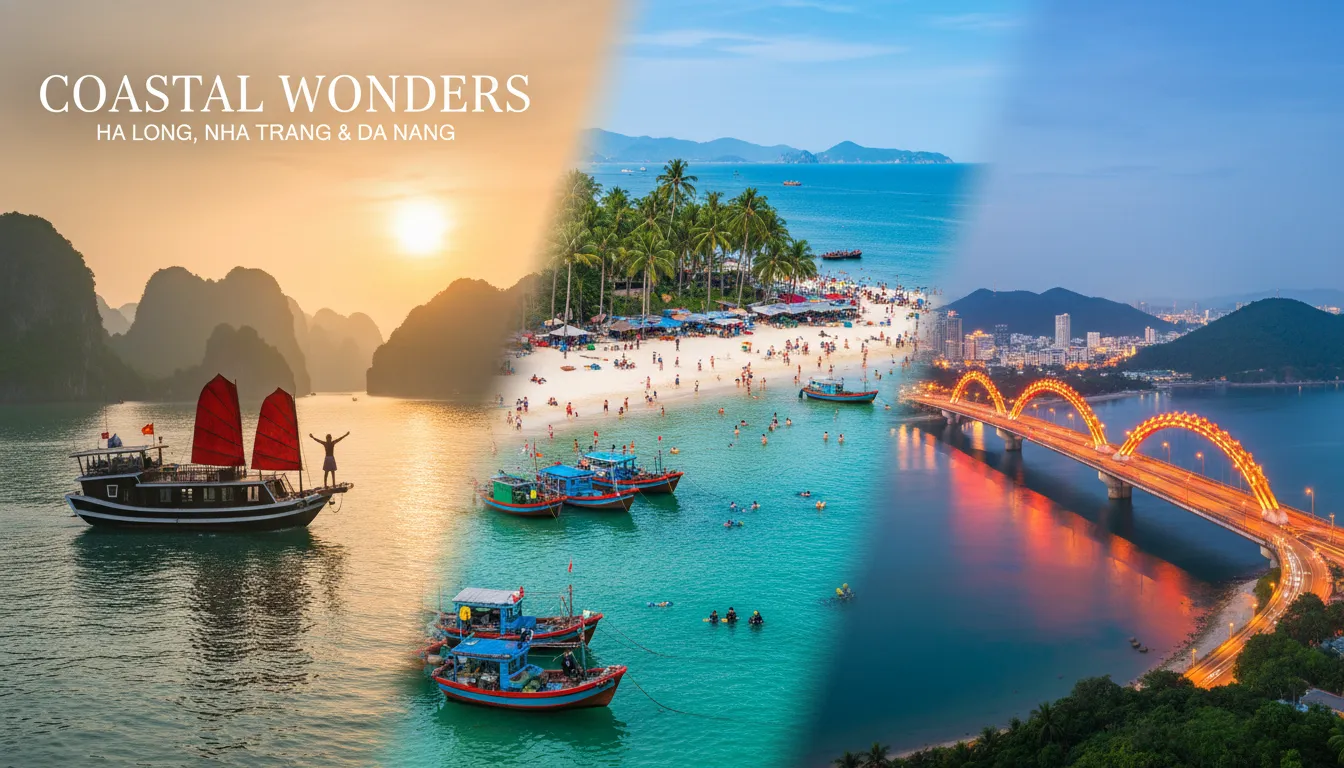
Ha Long Bay is one of the top travel destinations in Vietnam for good reason. This UNESCO-listed seascape is filled with tall limestone karsts rising from calm water. Most visitors choose a classic Ha Long Bay cruise, from day trips to overnight boats with cabins. For the best moment, sunrise on deck is highly recommended, when the bay turns soft gold and the islands look almost unreal.
Nha Trang: Beach Days, Seafood Nights
Nha Trang is made for easy coastal relaxation. Its long shoreline invites swimming, sunbathing, and slow walks by the water. After dark, the city’s seafood scene comes alive with grilled fish, clams, and local dipping sauces. It is also known for diving and snorkeling, with boat trips to nearby islands for clear water and colorful marine life.
Da Nang: Central Coast Hub
Da Nang blends a modern city feel with wide central beaches. It is a handy stop between Hoi An and Hue, making travel simple. Many travelers also use Da Nang as a gateway to Ba Na Hills, famous for cool air, mountain views, and family-friendly attractions.
4) Heritage & Inland Treasures: Hoi An, Hue, Ninh Binh, Phong Nha
Hoi An: Ancient Streets & Lantern Nights
Hoi An Ancient Town is one of Vietnam’s most loved heritage stops, known for preserved yellow streets, old shop houses, and riverside cafés. After sunset, the town glows with lantern-lit evenings and a calm, walkable vibe. For a quick beach break, travelers often pair the old town with nearby Cua Dai Beach.
Hue: Imperial Vietnam in One Place
In Hue, history feels close. The Imperial City draws culture fans with gates, courtyards, and royal stories. Outside the center, visitors can explore royal tombs along the Perfume River and quiet pagodas that show the city’s spiritual side.
Ninh Binh & Phong Nha: Karsts, Caves, and Rural Boats
Ninh Binh offers dramatic karst scenery rising from green fields, best seen from small rural boat rides through caves and river channels. Farther inland, Phong Nha-Ke Bang National Park is a top pick for cave lovers, with vast chambers and jungle landscapes. Adventure travelers may dream of Hang Son Doong, but access remains limited in 2026.
Best for: culture, nature, slow travel, and photography

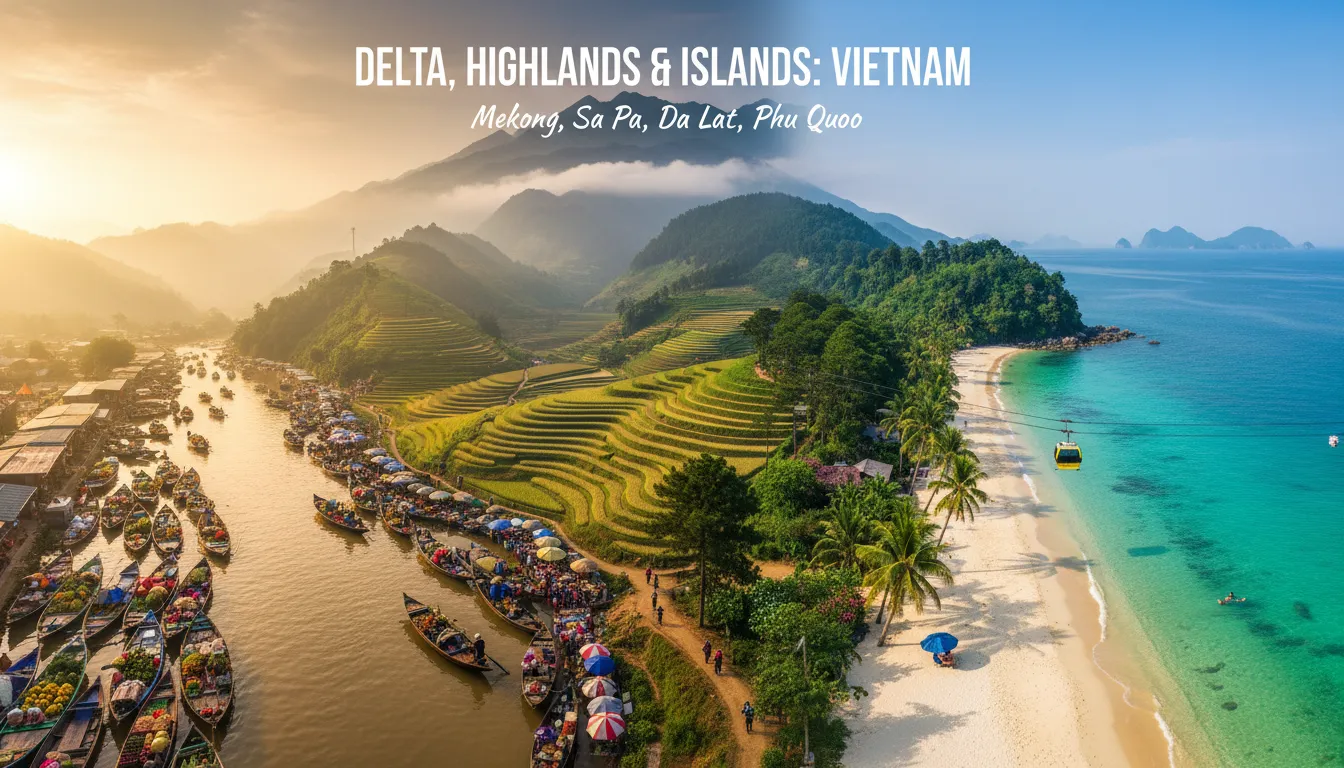
5) Delta, Highlands & Islands: Mekong Delta, Sa Pa, Da Lat, Phu Quoc
Vietnam’s south and north offer a strong mix of water, mountains, and sea. This route suits travelers who want local life, cooler air, and an easy beach finish.
Mekong Delta (Can Tho)
In the Mekong Delta, mornings start early on the water. The Cai Rang Floating Market near Can Tho is best at dawn, when boats crowd the river and sellers lift produce on long poles. Can Tho’s waterways also show daily river life—small canals, stilt homes, and calm scenes that make vivid photo ops.
Sa Pa & Da Lat
Up north, Sa Pa is known for terraced rice fields, misty mountains, and ethnic markets where visitors can see local crafts and food. The cooler climate is a plus for hikers. In the Central Highlands, Da Lat feels like spring most of the year, with pine hills, lakes, and easy walks for a slower pace.
Phu Quoc & Con Dao
For island time, Phu Quoc and Con Dao are popular beach escapes with clear water, snorkeling, and diving—ideal for the trip’s final unwind.
6) Practicalities, Budget & When to Go
Budget: affordable, with room to splurge
For Vietnam travel 2026, costs stay friendly for most travelers. Daily spending can be kept low by mixing street food, local buses, and simple guesthouses with a few comfort upgrades. A smart “treat night” in Hanoi—such as the Four Seasons Hanoi—can balance value and luxury without breaking the trip budget.
When to go: match the region
Vietnam’s weather changes by region, so timing matters. High season brings better conditions and higher prices, while low season can mean deals but more rain and humidity. The central coast (Da Nang, Hoi An, Hue) is often best in spring to early summer. The north has cool winters, which many visitors like for Sa Pa hikes and mountain views.
Transport & bookings
Domestic flights are frequent and save time between Hanoi, Da Nang, and Ho Chi Minh City.
Trains are scenic on the north–central stretch, especially for coastal views.
Book Ha Long Bay cruises and popular cave permits early in peak months.
Wild Cards & Creative Detours
Even with a “top 10” list, Vietnam Travel 2026 feels best when there’s room for a surprise. Imagine swapping Hoi An’s famous lantern nights for one quiet evening in a local family’s homestay. It’s a small trade-off, but it can become the memory that stays: shared tea, simple stories, and a morning that starts with village sounds instead of tour schedules.
Experiencing Vietnam is like reading a layered novel—each chapter reveals a different voice. The north can feel cool and dramatic, the central coast warm and balanced, and the south fast and full of energy. When travelers move between these “chapters,” the top places to visit in Vietnam connect into one clear story, not just separate stops.
“The best trips leave space for the unplanned.”
So, after ticking off the big highlights—whether it’s Hanoi, Ha Long Bay, Hue, Hoi An, Da Nang, Nha Trang, Da Lat, Ho Chi Minh City, the Mekong Delta, or Phu Quoc—this guide’s final note is simple: take one creative detour. Vietnam rewards curiosity, and 2026 is the perfect year to travel with a little freedom.